Blog
A Playbook for IT Leaders Navigating a Volatile Compute & Storage Market in 2026:
Read More



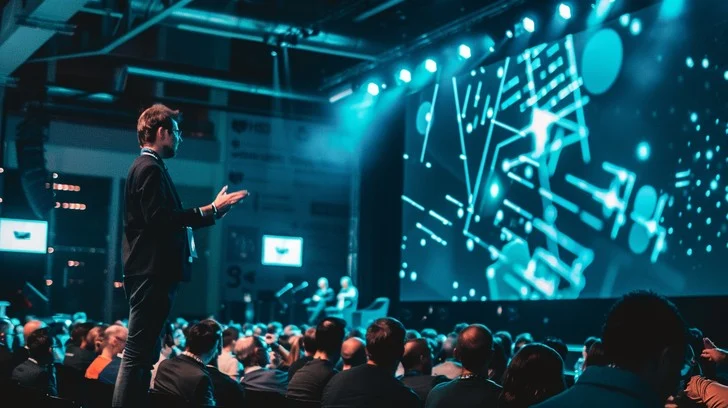
The Gartner IT Symposium/Xpo 2025 in Orlando brought together over 8,000 technology leaders, analysts, and innovators to chart the course for the digital enterprise of tomorrow. This article provides actionable insights from this conference to our customers and partners—helping you navigate the rapidly evolving landscape of AI, infrastructure, cybersecurity, business resilience, and virtualization. Here’s what you need to focus on as we head into 2026.
AI dominated the agenda at Gartner Symposium 2025, but the conversation is shifting from “everyday AI” ( low ROI productivity tools and generative AI) to “game-changing AI” and “agentic AI”—autonomous or semi-autonomous agents that can make decisions, take actions, and drive business outcomes with minimal human intervention. According to Gartner, the Agentic AI wave will be hitting with full force in 2026 and organizations need to plan accordingly or risk falling behind their competitors who harness this potential “industry defining” technology.
• AI Value Journey: True value from AI requires more than just implementation. It demands enterprise-wide change—reengineering processes, retraining teams, adjusting roles, and keeping data security at the forefront. For every dollar spent on AI technology, organizations should plan for at least as much (and sometimes double) investment in change management and implementation.
• Return on Employee, Investment, and Future: AI’s business case is threefold: augmenting employees (ROE), improving financials (ROI), and enabling strategic bets for future disruption (ROF). The most successful organizations balance all three, not just short-term productivity gains.
• Agentic AI: The next wave is agentic AI—systems that go beyond chatbots to orchestrate workflows, automate complex tasks, and even negotiate contracts. Adoption is accelerating, but human oversight and robust governance are essential, especially in critical infrastructure and operations.
What this means for you:
Start with AI use cases that deliver measurable value, but don’t stop at “quick wins.” Prepare your teams for the organizational change required to move from pilot projects to production-scale AI. Invest in AI literacy, upskilling, and governance frameworks to ensure safe and effective adoption.
Public cloud remains the default for new AI workloads, but the pendulum is swinging back toward hybrid and on-premises infrastructure for production-ready, cost-sensitive, or regulated workloads. Major vendors like Dell, HPE, and NetApp are rolling out AI-ready reference architectures, and the conference showcased demos of on-prem GPU and storage solutions that make it very easy for organizations to leverage as they shift their AI workloads from proof-of-concepts in the cloud over to production-ready AI workloads on-premises.
• Cost Analysis: With cloud costs rising and outages (like the recent AWS and Azure outages) impacting critical SaaS platforms, organizations are re-evaluating their cloud/on-prem mix. Cost analysis and workload placement are now board-level conversations.
• AI-Optimized Infrastructure: The demand for AI-optimized servers and storage is set to grow through 2028. Organizations should assess whether to keep AI workloads in the cloud, repatriate them on-prem, or adopt a burstable hybrid model.
What this means for you:
Organizations should be looking at infrastructure modernization, workload placement, and cost optimization heading into 2026 – with an eye towards AI-readiness across compute, storage and networking. Take advantage of Generative and Agentic AI IT Operations tools to make your environment more resilient and scalable.
Cybersecurity is more critical—and more complex—than ever. The Gartner Symposium Conference emphasized the need for proactive, preemptive security strategies, especially as AI and automation expand the attack surface.
• Cyber Resilience: It’s not just about preventing breaches, but ensuring rapid recovery. Immutable backups, air-gapped storage, and ransomware detection/orchestration are now table stakes.
• Outcome-Driven Metrics: Boards want to see outcome-driven security metrics, not just compliance checklists. Benchmarking protection levels and switching to outcome-based reporting can help justify investments and build board confidence.
• AI Security: As organizations deploy agentic AI, new risks emerge—requiring runtime enforcement, AI governance, and human oversight.
What this means for you:
Organizations need to reassess their cybersecurity and cyber resilience strategies as we head into 2026 and dive head-first into the Agentic AI era. The rise of fully autonomous cyber-attacks will require a more proactive cyber defense strategy moving forward with a focus on combating AI with AI and real-time protection.
Business resilience is no longer just about disaster recovery. The recent high-profile AWS, Azure, and Cloudflare outages are a wake-up call: SaaS dependencies, supply chain disruptions, and multi-cloud strategies all require new approaches to resilience.
• Assess SaaS Dependencies: Map out which critical business functions rely on third-party platforms and develop contingency plans in the case of short- and long-term outages. Make sure you are backing up your data in platforms like M365, Salesforce, and Okta.
• Adopt Multi-Cloud or Multi-Region Strategy: If you are leveraging one public cloud vendor make sure your critical workloads are spread across multiple regions for high availability or look at spreading those resources across multiple public cloudvendors in the event of a catastrophic single-vendor cloud outage.
• Modernize Data Protection: Adopt backup-as-a-service, clean room recovery, and air-gapped solutions to ensure rapid restoration after an incident. Focus on regularly testingyour ability to recover from ransomware, identity compromise, or cloud outages.
What this means for you:
Facilitate resilience workshops, help customers modernize their data protection strategies, and ensure they have the right tools and partners to recover quickly from disruptions.
The Broadcom-VMware disruption continues to be a hot topic. Many organizations are facing steep price increases, forced multi-year renewals, and uncertainty about the future of VMware now that it is a part of Broadcom. Other enterprise-class hypervisor options have emerged, and third-party vendors have been adding support for other options outside of VMware as well.
• Start Early: Migrating off VMware (or even just diversifying) can be a multi-year journey. Most organizations need 12–24 months to plan, test, and execute a transition from VMware to another hypervisor.
• Explore Alternatives: Nutanix, HPE VM Essentials, Hyper-V, OpenShift Virtualization, Proxmox, and others are gaining traction. Third-party support vendors and new partnerships (like Nutanix + Pure Storage) offer flexibility and cost savings.
• Demo and Test: Leverage “as a service” proof of concept and demo environments like theSayers Center or Excellence lab to easily evaluate and explore VMware alternatives without the need to take up additional engineering resources in your environment.
What this means for you:
It is imperative to know when your VMware renewal is due and have a migration strategy in place that can either help shrink your VMware footprint or migrate off of it entirely. Leverage trusted partners to discuss alternative hypervisors and help with Broacom contract negotiations.
1. AI is a journey, not a destination. Move beyond pilots and productivity tools—invest in organizational change, governance, and upskilling to unlock true value and be ready to embrace game-changing agentic AI.
2. Hybrid infrastructure is the future. Cloud isn’t always the answer; cost, resilience, and regulatory needs are driving renewed interest in on-prem, hybrid-cloud; and edge use cases. Focus on the right workload; in the right location; for the right cost.
3. Cybersecurity must be proactive. Bad Actors will continue to leverage Generative and Agentic AI hacking tools which will force organizations to combat AI cyber-attacks with proactive AI cybersecurity tools that leverage automation and instant remediation.
4. Business resilience is strategic. Public Cloud and SaaS outages are inevitable and will likely get worse as vendors leverage Agentic AI for administration at scale. Organizations need to modernize their resiliency plans to include Public Cloud, SaaS and Supply Chain disruption in addition to traditional hybrid-cloud infrastructure recovery.
5. VMware alternatives require planning. Start early, test thoroughly, and leverage VAR expertise to navigate the transition from VMware to alternative hypervisors.
The 2025 Gartner Symposium conference made it clear: the pace of change is accelerating, and the risks and opportunities are greater than ever. As your trusted VAR, Sayers is here to help you “walk the golden path to value”—balancing innovation with resilience, and technology with human readiness. Let’s work together to build a future-ready IT strategy that delivers measurable business outcomes, secures your operations, and positions you for success in 2026 and beyond.
Ready to discuss your AI, infrastructure, cybersecurity, or virtualization strategy? Contact Sayers to schedule a workshop or demo tailored to your organization’s needs.