
Blog
A Playbook for IT Leaders Navigating a Volatile Compute & Storage Market in 2026:
Read More



In today’s hyper-connected digital landscape, network reliability and scalability are no longer optional—they are essential. As enterprises expand across hybrid and multi-cloud environments, managing foundational network services has become increasingly complex. This is where DDI—the integration of DNS (Domain Name System), DHCP (Dynamic Host Configuration Protocol), and IPAM (IP Address Management)—emerges as a critical enabler for operational efficiency and resilience.

Recent disruptions at major cloud providers underscore a fundamental truth: DNS remains the backbone of the internet—even in the era of hyperscale cloud. For example:
These incidents demonstrate that while cloud platforms promise elasticity and resilience, the underlying services—DNS, DHCP, and IPAM—are indispensable for connectivity and security. As organizations adopt multi-cloud strategies, the complexity of managing DNS across disparate environments grows exponentially. DDI solutions deliver automation, visibility, and policy enforcement to mitigate risks, prevent outages, and maintain compliance. Far from being legacy technology, DDI is the foundation of modern digital infrastructure.
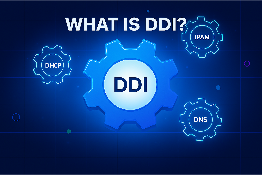
DDI is not merely an acronym—it is a strategic approach to simplifying network operations. By consolidating DNS, DHCP, and IPAM into a unified platform, organizations gain:
This integration is vital for enterprises managing thousands—or even millions—of IP addresses across on-premises and cloud environments. Instead of juggling disparate tools, DDI provides a single pane of glass for network administration.
DNS: The Internet’s Directory
DNS translates human-readable domain names into machine-friendly IP addresses. Without DNS, users would need to memorize numeric IP strings—a usability nightmare. Beyond basic name resolution, DNS supports:
DHCP: Dynamic IP Allocation
DHCP automates IP address assignment, reducing manual errors and accelerating device onboarding. When a device joins the network:
This automation is indispensable for large-scale networks where manual IP assignment is impractical.
IPAM: Visibility and Governance
IPAM provides the management layer for IP resources by tracking:
With IPAM, administrators can detect anomalies, prevent IP conflicts, and enforce security policies—all from a unified dashboard.


Modern enterprises rarely rely on a single cloud provider. DDI solutions bridge this gap by offering centralized management across AWS, Azure, GCP, and on-prem infrastructure. Features such as API-driven automation and integration with ITSM platforms (e.g., ServiceNow) streamline workflows and incident response. As recent outages illustrate, DDI is essential for ensuring redundancy and resilience in hybrid and multi-cloud architectures.

DNSSEC authenticates DNS responses, mitigating risks such as spoofing. Combined with DDI’s centralized architecture, organizations can implement:


DDI is not just a technology—it is the cornerstone of resilient, secure, and scalable networks. As organizations embrace hybrid and multi-cloud strategies, integrated DDI solutions become indispensable for maintaining performance, mitigating risk, and ensuring business continuity.
If your enterprise is looking to ensure readiness for deploying and managing a DDI solution—built on best practices for securing data, devices, and identities—or needs expert guidance on evaluating the range of enterprise DDI solutions available, schedule a call with our team. Reach out today to start building a robust and secure DDI strategy.