Blog
AI Is Redefining Cybersecurity: Why the Future Is Cyber Resilience
Read More

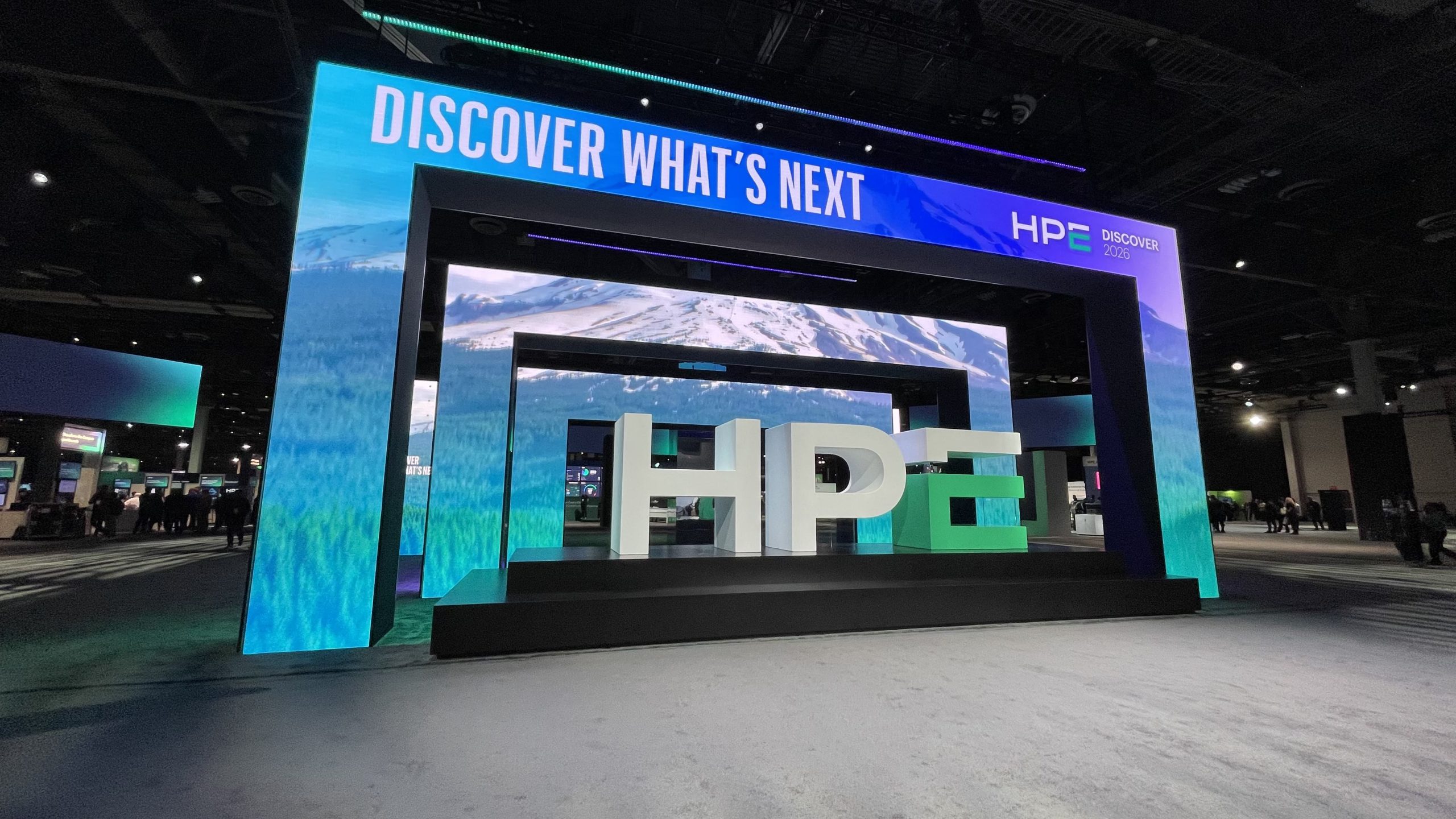

HPE Discover 2026 made one thing clear: the next wave of enterprise infrastructure will be shaped by AI, hybrid cloud, and networks that can operate with far more intelligence and automation than traditional IT teams have relied on in the past. HPE’s public event messaging emphasized networking, cloud, and AI as the major themes, with keynote sessions focused on why “architecting AI starts with your network” and how self-driving networks are becoming a practical requirement for AI-era operations.
For customers, that message matters because AI is no longer just a workload conversation. It is an architecture conversation. Data must move securely between edge, campus, data center, cloud, and AI systems. Applications need predictable performance. Operations teams need faster root-cause analysis and fewer manual steps. That is why HPE’s integration of Aruba and Juniper was such a major focus. Together, HPE is positioning the combined portfolio to cover wireless, wired, routing, switching, SD-WAN, SASE, data center fabrics, and AI networking use cases from edge to core.
One of the most important networking takeaways was the move toward self-driving operations. HPE highlighted Marvis Actions, Mist AI, Aruba Central integration, CX switch management through Mist, Apstra-based data center automation, and AI-native operations that can move teams from reactive troubleshooting to proactive recommendations and, eventually, governed auto-remediation. In practical terms, this means IT teams can reduce alert fatigue, identify issues before users open tickets, and automate common fixes with auditability and control.
This is especially relevant as customers evaluate whether their networks are AI-ready. AI workloads stress infrastructure differently than traditional enterprise applications. GPU clusters, inference systems, distributed data pipelines, and edge AI use cases all depend on low-latency, highly reliable network fabrics. HPE’s announcements around Juniper QFX switching, Apstra-managed fabrics, AI-optimized networking software, and unified observability reinforce the idea that network modernization should be part of every AI strategy—not an afterthought.
HPE also used Discover to sharpen its private cloud message. In a market where many customers are rethinking virtualization strategy, HPE Morpheus and VM Essentials received significant attention. The message is not simply “replace VMware.” It is about helping customers regain choice, predictability, and control across virtualized, containerized, and hybrid environments. HPE Private Cloud now includes options such as PC7000 for large enterprise private cloud, PC3000 for disaggregated private cloud, and SimpliVity PC1000 for compact hyperconverged deployments which give customers multiple options to run virtualized workloads from the data center to the edge depending on their use case.
HPE announced several new features for HPE Morpheus at Discover 2026. HPE Morpheus Software 9.0 and 9.1 introduce capabilities such as Morpheus Central on GreenLake, orchestration copilot functionality, visual workflow automation, software-defined networking, micro-segmentation, stretched clusters, and lifecycle management improvements. For customers, this creates a path to manage VMware and HPE VM Essentials side by side, automate migrations over time, and avoid a risky rip-and-replace approach.
From a business standpoint, VM Essentials is gaining momentum because it directly addresses two customer pain points: licensing uncertainty and operational complexity. HPE is positioning VM Essentials for customers who want more predictable per-socket economics, while Morpheus Enterprise expands the conversation into hybrid cloud orchestration, governance, automation, cost visibility, and multicloud control. That distinction gives customers flexibility: reduce virtualization cost today, modernize private cloud operations next, and build toward hybrid cloud management when the business is ready. HPE is also offering substantial discounts on VM Essentials 3-year licensing agreements along with 25 licenses of Zerto at a drastic discount to help customers migrate from VMware to VME as well.
AI was another major pillar, with HPE Private Cloud AI positioned as a production-ready platform for enterprise AI close to the data. HPE highlighted enhancements for secure agentic AI, including governed agent sandboxes, agent registration, Zerto integration for recovery from rogue agent behavior, Alletra Storage MP X10000 integration for AI-ready data, Data Fabric support, workload prioritization, multi-node inference, and scale up to 256 GPUs.
The customer value is straightforward: many organizations want the benefits of AI without sending sensitive data into unmanaged or unpredictable environments. Private Cloud AI gives them a path to run AI closer to enterprise data, improve governance, support sovereignty requirements, and better control cost and performance. This is particularly important for regulated industries, healthcare, financial services, manufacturing, public sector, and any organization concerned about data gravity, model governance, security, or unpredictable public cloud spend.
Discover also highlighted a more immediate challenge for customers: compute and storage pricing pressure, component shortages, and supply chain uncertainty. The internal recap noted that industry experts expect chip shortages and price increases to last into 2028, and HPE responded with practical motions such as bringing back 30-day quote validity, financing options, pre-built Smart Bundles and Smart Choice compute offerings, buy-back programs, GreenLakeconsumption models, and CloudPhysics assessments to optimize existing environments.
For customers, this creates an opportunity to be proactive instead of reactive. If refreshes are coming in the next 6–18 months, now is the time to validate lead times, lock pricing where possible, evaluate financing, and determine whether a consumption-based model can reduce upfront capital pressure. HPE Financial Services was also highlighted as a way to align payments with deployment timing and value realization, including flexible payment structures and programs designed to reduce upfront cost for AI, networking, compute, storage, and software investments.
At the same time, not every customer needs to buy their way out of the problem immediately. Tools like CloudPhysics can help identify oversized VMs, stranded CPU and memory, server consolidation opportunities, storage inefficiencies, and workloads that may be better suited for cloud, private cloud, or continued on-premises operation. In a constrained market, optimization becomes a buying strategy: sweat the right assets longer, refresh the right platforms sooner, and avoid overbuying capacity that is already hidden inside the current estate.
The biggest takeaway from HPE Discover 2026 is that infrastructure decisions are becoming more interconnected. Networking modernization supports AI readiness. Private cloud strategy impacts virtualization cost and resiliency. Storage architecture determines whether enterprise data can be used effectively by AI platforms. Financing and supply chain planning influence when and how customers modernize. HPE’s portfolio is increasingly positioned around that full-stack reality: networking, compute, storage, private cloud, AI, data protection, observability, and operations under a more unified GreenLake-centered model. No other vendor has mature coverage across all these platforms like HPE.
For IT leaders, the recommended next step is to start with a practical assessment. Is the network ready for AI traffic patterns? Are virtualization costs creating budget pressure? Are current compute and storage platforms exposed to price increases or long lead times? Is enterprise data ready for AI, or trapped in disconnected silos? The organizations that answer those questions now will be better positioned to modernize deliberately, control cost, and build an AI-ready foundation without creating unnecessary disruption.
Sayers works with organizations of all sizes to perform infrastructure and network maturity assessments to identify a practical path forward to modernization and AI-readiness. They havealso helped companies leverage tools like HPE CloudPhysics to find cost savings in their existingenvironment by optimizing their current compute and storage resources and identifying hardware consolidation opportunities as well. Sayers also has the ability to help customers learn more about Morpheus and VM Essentials as a VMware alternative by doing technical deep-dives and hands-on demos in the Sayers Center of Excellence (COE).